
Innovation
Market Volatility Videos: How Advisors Keep Clients Calm
Personalized video helps financial advisors communicate during market volatility, reducing panic calls and strengthening client trust.
Author Name
Author Title
Published :
Last updated: April 2026
When the Market Drops, Your Phone Rings
The S&P falls 3% on a Tuesday morning. By 10 AM, you have six voicemails, four emails, and a text from your biggest client asking if they should "move everything to cash."
You spend the next two days in back-to-back calls saying the same thing: stay the course, here is why, here is what we are doing. By Thursday you are behind on actual portfolio work.
A personalized video sent within hours of a market drop can cut those panic calls by 40-60%. Each client sees their name, their portfolio balance, and your calm, confident face explaining exactly what is happening and why their specific plan is still on track.
Why Email Blasts Fail During Market Stress
When markets swing, every advisor sends the same "stay the course" email. Your clients get three of them from three different firms before lunch. They all blend together.
Text cannot convey tone. A written "do not worry" reads differently than hearing your advisor say it while looking into the camera. During volatile periods, clients need to see confidence — not just read about it.
Personalized video solves both problems. It is unique to each client, it carries your tone and body language, and it includes their actual numbers instead of generic reassurance.
What to Include in a Market Volatility Video
Open with acknowledgment. "I know this week's headlines are stressful. I want to walk you through exactly where your portfolio stands." Validate the feeling before delivering the facts.
Show their specific numbers. Display the client current balance, their year-to-date performance, and how this drop compares to their long-term plan. Seeing "you are still up 12% over three years" is far more calming than "markets recover over time."
Explain what you are doing. Are you rebalancing? Tax-loss harvesting? Holding steady? Tell them the specific action — or deliberate inaction — you are taking on their behalf.
End with perspective. A quick comparison: "The last time markets dropped this much was [date]. Here is what happened in the 12 months after." One data point. No lecture.
How to Send Volatility Videos Fast Enough to Matter
Pre-record a template. You do not need to film fresh footage every time the market dips. Record a 2-minute video addressing general volatility concerns, with pauses for personalized data overlays. When a drop happens, you trigger the send — the platform personalizes each video automatically.
Set a trigger threshold. Decide in advance: if the S&P drops 2%+ in a single day, you send videos within 4 hours. Having a rule removes the "should I or should I not" debate when markets are moving fast.
Segment by risk tolerance. Your aggressive-growth clients do not need the same message as your conservative retirees. Create two templates — one for clients in growth allocations, one for income-focused portfolios. Two videos cover 90% of your book.
The Trust Dividend: What Happens After the Volatility Passes
Advisors who communicate proactively during downturns see 23% higher client retention over the following 12 months, according to industry surveys. The video itself takes minutes. The trust it builds lasts years.
Clients who received personalized communication during the 2022 correction were significantly less likely to reduce their contributions or switch advisors. The ones who heard nothing? They started shopping.
Keep Reading
Wealth Management Client Communication With Personalized Video — Build a year-round video communication strategy for your advisory practice.
Fiduciary Advisor Video: Build Trust With Personalized Communication — Why fiduciary advisors have a natural advantage with personalized video.
Financial Advisor Referral Video That Generates Introductions — Turn satisfied clients into active referral sources with video.
Frequently Asked Questions
How quickly should financial advisors communicate during a market drop?
Financial advisors should send personalized communication within 4-6 hours of a significant market event. Research shows that proactive outreach within the same trading day reduces panic-driven client calls by 40-60% and strengthens long-term trust.
What should a financial advisor say in a market volatility video?
A market volatility video should acknowledge the client concern, show their specific portfolio performance in context, explain any actions being taken, and provide historical perspective. The key is using the client actual numbers rather than generic market commentary.
Does personalized video improve client retention for financial advisors?
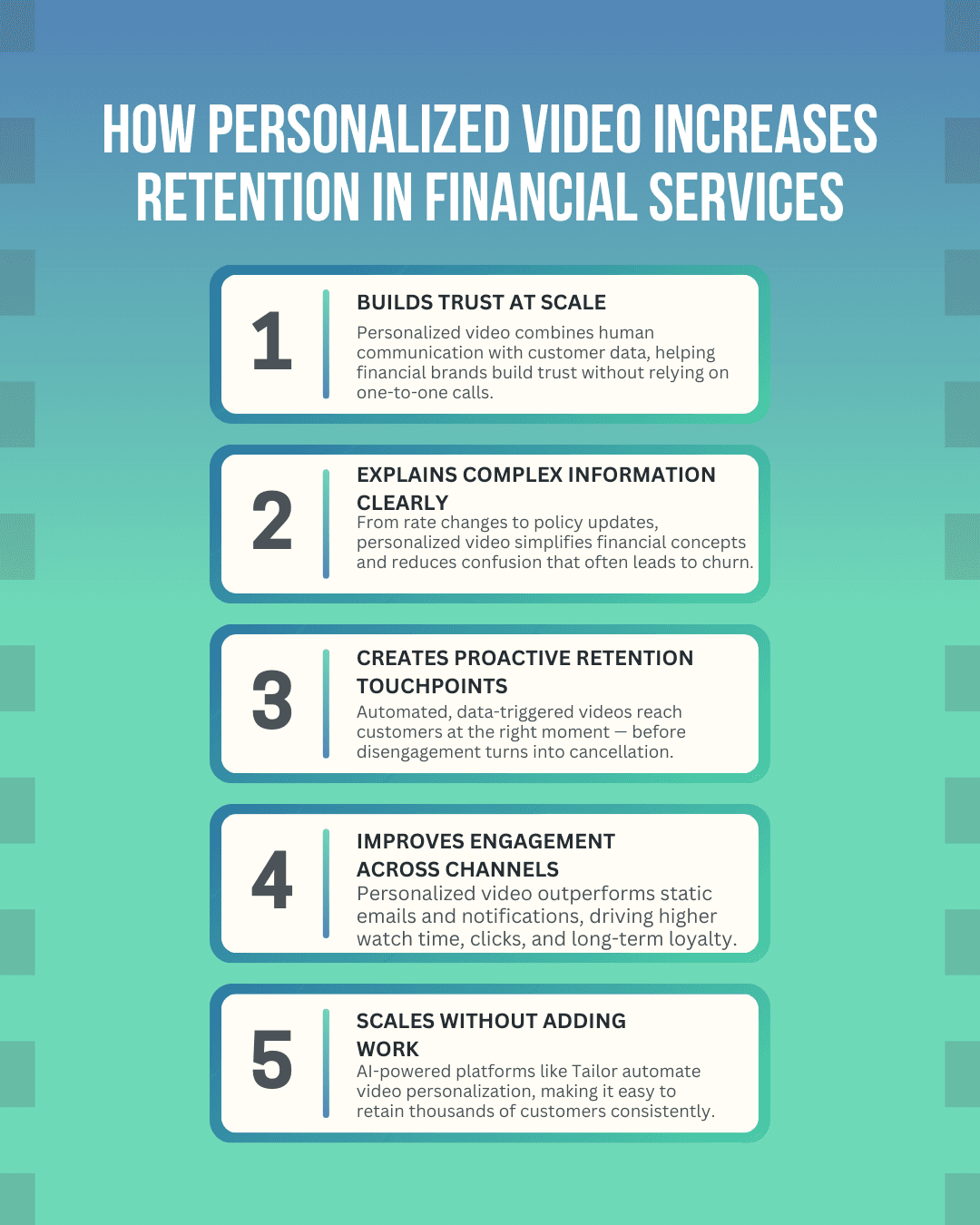
Yes. Advisors who communicate proactively with personalized video during market downturns see approximately 23% higher client retention over the following year. The combination of personal tone and client-specific data builds trust that generic emails cannot match.
How many video templates does an advisor need for volatility communication?
Most advisors need just two templates: one for growth-oriented clients and one for conservative or income-focused portfolios. These two segments cover roughly 90% of a typical book of business and ensure each client gets messaging relevant to their risk profile.
Market volatility is inevitable. Losing clients because of it is not. A 2-minute personalized video turns a panic moment into a trust-building opportunity.
Tailor.Video helps financial advisors send personalized market update videos to every client in minutes — not days. Each video includes the client name, portfolio data, and your reassuring presence. Book a demo to see how advisors stay ahead of volatility.
Related Reads for You
Discover more articles that align with your interests and keep exploring.